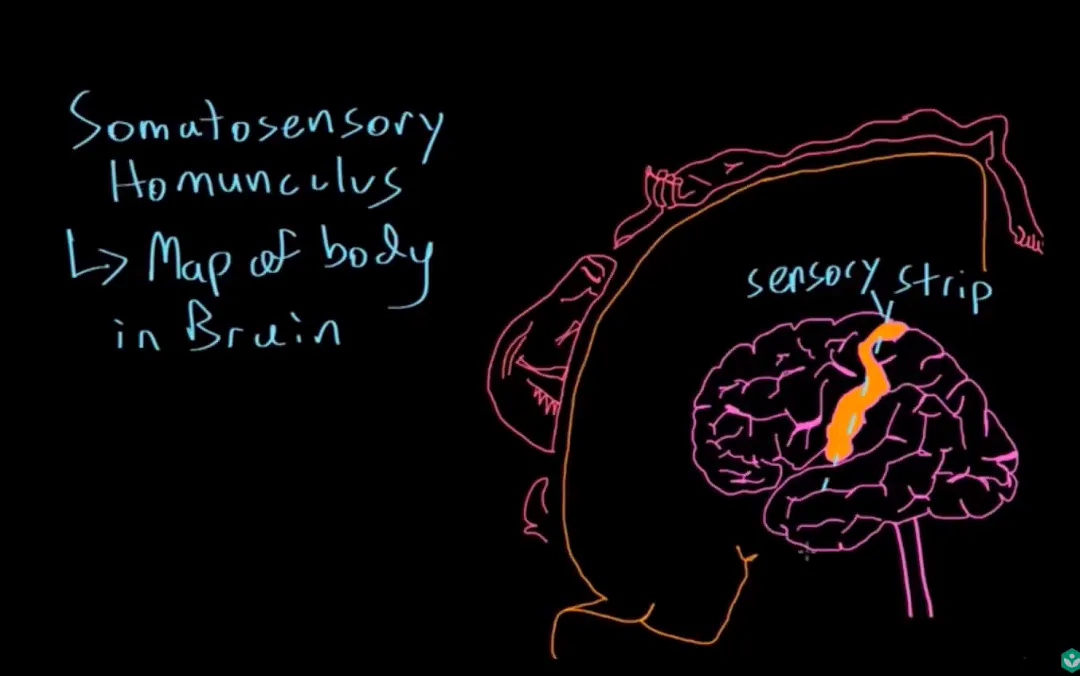
Homunculus: What is it?
The homunculus is a fascinating and important concept in neuroscience that helps us understand how the brain processes sensations and movements from different parts of the body. The term "somatosensory homunculus" specifically refers to the map of the body that exists within the primary somatosensory cortex, which is located in the postcentral gyrus of the parietal lobe.
🔍 What Is the Somatosensory Homunculus?
The somatosensory homunculus is a distorted "map" of the human body laid out across the brain’s surface. Each region of the body is represented in a specific area of the cortex. The size of each body part on the homunculus corresponds to how sensitive that body part is—not how big it is physically.
For example:
Hands, lips, tongue, and face take up much more space on the homunculus than larger body parts like the legs or back, because they have a higher concentration of sensory receptors and require more precise processing.
This map is topographically organized, meaning:
The brain areas responsible for adjacent body parts are also located next to each other in the cortex.
For instance, the area processing the thumb is next to the area for the index finger.
🧠 How It Works: Pathway of Sensory Input
Sensory receptors in the skin, muscles, and joints detect stimuli (touch, pressure, pain, temperature, proprioception).
These signals travel via peripheral nerves to the spinal cord and then up to the brainstem.
From there, information is relayed to the thalamus, the brain's central sensory relay station.
The thalamus sends the information to the primary somatosensory cortex, where the corresponding area of the homunculus processes it.
🎭 The Homunculus Figure: A Visual Metaphor
If you were to create a figure based on the proportions of the homunculus map, it would look quite odd:
Huge lips, tongue, and hands
Tiny arms, torso, and legs
This visual representation is called the "sensory homunculus man." It's a powerful teaching tool to illustrate how the brain allocates resources based on sensation, not size.
🧍 Sensory vs. Motor Homunculus
The sensory homunculus maps touch and sensation.
The motor homunculus, located in the precentral gyrus (just in front of the sensory area), maps muscle control and movement.
They are similar in layout but serve different functions.
🧠 Clinical Relevance
Understanding the somatosensory homunculus helps in:
Diagnosing brain injuries or strokes: Damage to a specific area of the cortex leads to loss of sensation in the corresponding body part.
Planning surgeries: Neurosurgeons avoid areas with high sensory representation to minimize post-operative deficits.
Neuroplasticity research: When body parts are lost or unused (e.g., amputation or paralysis), other areas can "take over" that cortical space.
🧘 Yoga and Mind-Body Practices
Interestingly, mindfulness, yoga, and body-based therapies may enhance the brain’s body map by increasing awareness and activation of underrepresented areas (e.g., feet, pelvis). This is especially helpful for people with:
Chronic pain
Anxiety
Trauma-related dissociation
These practices help "reclaim" and reintegrate body parts into conscious perception.
Summary
The somatosensory homunculus is a key to understanding how the brain interprets and prioritizes sensory input. It's not about the size of the body part, but about how much attention the brain gives it. This concept has deep implications for healing, movement therapy, and understanding the intimate connection between body and mind.


